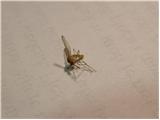
House mosquito (Culex pipiens Linnaeus)
The common house mosquito is one of the most widespread and generally known insects that hikers often encounter near mountain huts, in valleys, and near stagnant water sources. It is recognized by its slender, pale brownish body and long, thin legs. Females are equipped with a long proboscis with which they suck blood from mammals and birds, needed for egg development, while males feed exclusively on nectar and plant saps.
Its life cycle is closely tied to water, as females lay eggs in stagnant water sources such as puddles, mountain pools, rainwater collectors, or even small puddles. The species is most active at dusk and at night, announcing itself with a characteristic high-pitched buzzing caused by extremely rapid wing flapping. Although unpopular among people due to bites, mosquitoes are an important part of the food chain, providing a key food source for numerous birds, bats, and aquatic insects.
In Slovenia, the species is widespread and present everywhere it finds suitable breeding conditions. Hikers protect themselves most effectively from their bites using repellents and appropriate clothing choices, especially in humid forest areas and near water bodies, where their concentration is highest.
Images: