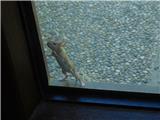
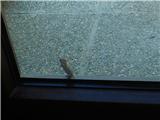
House Mouse (Mus musculus)
The House Mouse (Mus musculus) is one of the most common small mammals that over millennia has closely attached itself to human proximity and dwellings. It is recognized by its slender body with grey-brown fur that is somewhat lighter on the belly, and by its long and almost hairless tail, which measures about as much as its body. Its most pronounced senses are hearing and smell, evidenced by large ears and a constantly twitching snout. Without the tail, it grows to a length of ten centimetres, and due to its small size and exceptional agility, it can squeeze through incredibly narrow openings.
In the mountainous world, it prefers to stay near alpine huts, where it seeks food and safe shelter from predators. Although it mainly feeds on plant food such as seeds and fruits, it is extremely adaptable and readily exploits food scraps near people. It is active mainly at dusk and at night, when it moves through its surroundings with quick and quiet movements. It is a very curious and intelligent animal that builds a nest from soft materials in hidden corners. Although sometimes unwelcome in dwellings, the house mouse is an inevitable part of the mountain cultural landscape and an important link in the food chain of numerous predators.
Images: