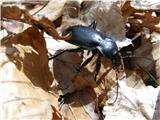
Leathery carabid (Carabus coriaceus)
The leathery carabid with the scientific name Carabus coriaceus is a true giant among our beetles, as it can grow up to four centimeters in length. Due to its size and imposing appearance, it is hard to overlook while walking forest paths, especially when it moves nimbly across fallen leaves. Its body is completely black and matte, but it is most recognizable by its fused elytra with a rough, finely pitted structure that strongly resembles leather, after which the species got its Slovenian name.
In contrast to many other beetles, the leathery carabid does not fly, as its wings are atrophied and the dorsal elytra are firmly fused. However, it is an excellent runner that makes good use of its long and sturdy legs for hunting on the ground. Although most active at dusk and at night, it is often encountered during the day in humid weather or in the cool shade of beech forests. Its natural habitat is primarily deciduous and mixed forests, where it is distributed from lowlands up to the forest line in the high mountains.
In the forest ecosystem, it plays the role of an important predator, feeding on earthworms, various insects, and snails. By regulating the numbers of other animal species, it maintains natural balance in the soil. If you surprise it on the path, it will most likely quickly hide under leaves or roots, so an encounter with it is always a great opportunity to observe one of the most powerful ground dwellers of our mountains.
Images: