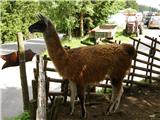
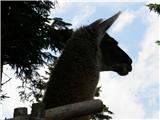
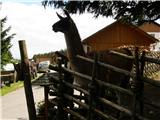
The llama is a domesticated member of the camel family originating from the high-altitude plateaus of South America. It is recognized by its long neck, slender legs, and characteristic banana-shaped ears curved inwards. Its body is covered with thick, wool-like fur that appears in numerous color shades – from white and brown to black or spotted. Unlike its close relatives the camels, llamas do not have humps.
Due to a thousand-year adaptation to the harsh mountain environment of the Andes, llamas are extremely resilient and modest animals. The special structure of their legs with soft pads provides excellent grip on rocky and steep terrain, while their light step damages sensitive mountain undergrowth less than heavier livestock. They feed on grass, herbs, and shrubs. They are distinctly social beings that live in herds and are known for their calm but sometimes stubborn nature.
Hikers in our hills most often encounter llamas on tourist farms or near mountain huts, where they serve as pack animals for carrying loads. Although usually friendly and curious, their most famous defensive behavior is spitting, with which they resolve disputes in the herd or drive away intruders. With their exotic appearance and calm gait, they bring a touch of the distant Andes to the Slovenian mountain world.
Images: