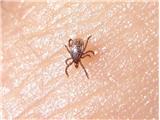
Ticks are small external parasites that feed on the blood of mammals, birds, and occasionally reptiles. Their body is basically strongly flattened, allowing them to move unnoticed through fur or under clothing, and after feeding, their volume can increase multiple times. In Slovenia, they are active from early spring to late autumn, when temperatures rise above 5–7 °C.
They are most commonly encountered in humid mixed forests, tall grass, bushes, and along forest paths, up to an altitude of about 1500 meters. Contrary to common belief, ticks do not jump from trees but wait for the host on the tips of grass blades or low vegetation. For hikers, they are important primarily as carriers of various diseases such as tick-borne meningoencephalitis and Lyme borreliosis.
Protection in the hills is crucial, so light-colored clothing with long sleeves and pant legs, use of repellents, and thorough body checks after every hike are recommended.
Procedure in case of a tick bite
If you notice an attached tick on your body, follow these steps.
Removal as soon as possible – Remove the tick immediately upon noticing it, as the risk of infection transmission increases with time.
Proper technique – Grasp the tick with pointed tweezers as close to the skin (at the head) as possible and pull it out with a steady upward motion. Do not apply oil, cream, or alcohol to it and do not twist it.
Disinfection – Clean the bite site after removal with soap and water or disinfect with alcohol.
Monitoring the condition – Observe the bite site for a few weeks. If a characteristic redness appears that spreads and fades in the center, or if you develop fever and muscle pain, see a doctor immediately.
Images: