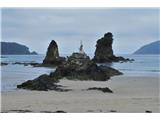
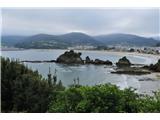
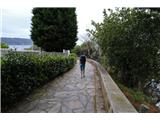
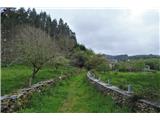
Hike.uno
Hike.uno
Login
Login
Username:
Password:
Login
Not registered yet? Registration.
Forgot password?
      
List of forums / Spain / Other mountain ranges - Spain / Camino de Mar - sea path along the Atlantic

Camino de Mar - sea path along the Atlantic

Print
bagi10. 06. 2026 18:27:44
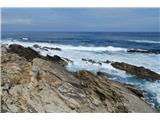
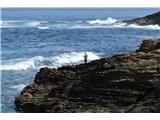
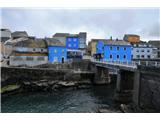
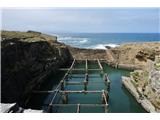
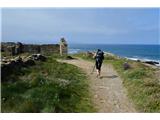
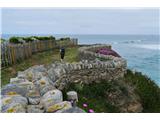
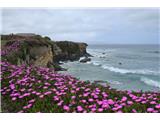
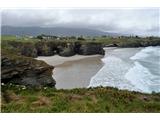
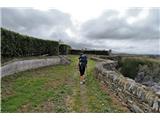
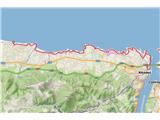
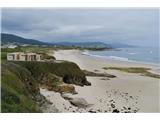
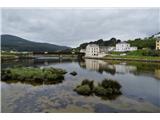
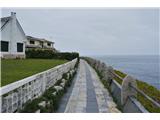
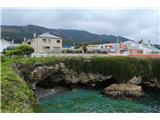
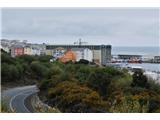
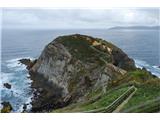
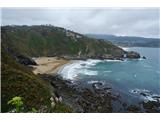
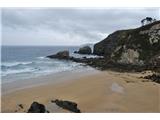
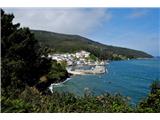
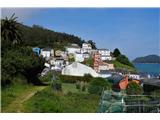
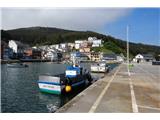
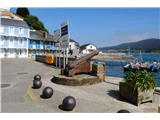
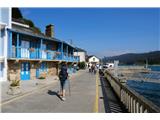
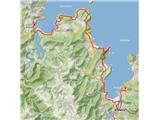
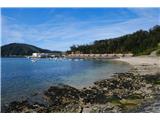
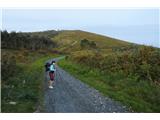
After two years of break we went to Spain again this year, this time on the coastal path Camino de Mar. This is an official pilgrimage path that starts in the town of Ribadeo and ends in the town of Ferrol. There are two variants, the shorter, more inland one, which is about 190 km long. We walked the longer, more coastal one, which runs along the Atlantic and we covered a good 280 km. Both are located in Galicia, a beautiful and mystical land jezik.

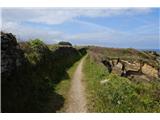
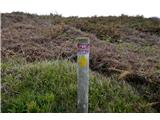
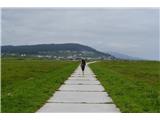
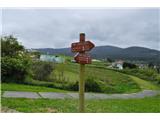
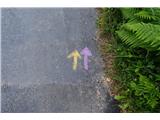
We decided on Camino de Mar after a wonderful experience with Camino dos Faros on our previous visit to Galicia and on the recommendation of an acquaintance. There was not much written about this path on the internet, I could barely find GPS tracks. But we really needed them. I have never encountered such a poorly marked Camino, and I have been visiting Spain for 12 years. Nor such a lonely one, although I have walked in many places. On the entire path we were completely alone, not even daily hikers were to be seen.

There are no pilgrim accommodations like albergo anywhere, except at the beginning and end of the path, and even those are there because of Camino del Norte or Camino Inglese. We stayed in various hotel rooms, which are very cheap and of quite adequate quality nasmeh. Breakfast was often included in the price. For two people many private albergues on more visited Camino paths would be more expensive, and we would sleep on bunks and crowd in shared bathrooms. So we have no complaints about accommodation, but it is wise to book accommodations at least a day in advance.

Expectations were high, so what are the impressions ???

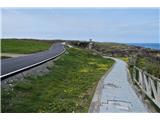
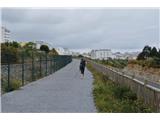
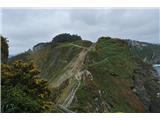
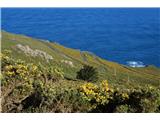
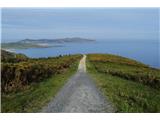
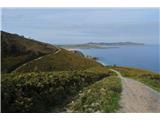
According to the rare descriptions this should have been a super experience walking along the mighty Atlantic, but it turned out quite differently. Camino dos Faros from previous years simply set too high standards that will be hard to surpass. Even after longer consideration and time distance this year's Camino de Mar cannot even approximately be equated with the previously mentioned one. There was simply too much asphalt and hard surfaces of coastal promenades. On the entire path this is at least 70% or rather more, often also most of the day. The path does not only run by the sea, but often goes quite far from it, even very high. We climbed highest even over 600 m and then we looked at the sea deep below us.

Because of all this I place Camino de Mar alongside the northern path Camino del Norte. In fact together with Camino Inglese it is also its alternative to Santiago, but lonely and almost not marked. In short …. whoever likes Norte, may also like de Mar. Whoever is looking for the experience of Camino dos Faros, should look for it elsewhere. More about our trip follows later …

A few more links for comparison …

Camino del Norte … KLIK
Camino dos Faros … KLIK
Camino de Mar - sea path along the Atlantic Fully loaded, waiting to depart. Each has about 90 different pieces of equipment, some in greater numbers1
Camino de Mar - sea path along the Atlantic Zagreb Airport. From here we got the cheapest tickets to Ovieda. We will change planes in the Balearics with minimal waiting2
Camino de Mar - sea path along the Atlantic This will go like a rocket, we are flying with Laudo :)3
Camino de Mar - sea path along the Atlantic Boarding is standardly slow, which is quite understandable with so many suitcases4
Camino de Mar - sea path along the Atlantic A little turbulence is tossing us around, but we are not worried. Everyone has arrived safely so far :)5
Camino de Mar - sea path along the Atlantic Final destination, Asturias Airport. Right next to it is the bus that will take us to nearby Oviedo6
Camino de Mar - sea path along the Atlantic Only a walk from the bus station to the hotel remains. We will continue early in the morning with a drive to Ribadeo7
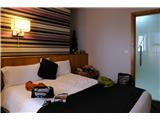
Camino de Mar - sea path along the Atlantic A wonderful hotel for 60€ per night. At home we can only dream of such prices8
Camino de Mar - sea path along the Atlantic Evening view from our window …9
Camino de Mar - sea path along the Atlantic … and the night view too. Good night10
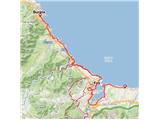
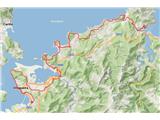
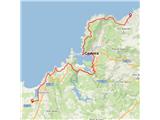
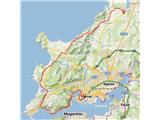
Camino de Mar - sea path along the Atlantic Map of the entire route we will hike. In total it will be 283 km and 7200 meters of elevation11
(+10)like
bagi11. 06. 2026 13:30:42
DAY 1 ...

First we had to get from Oviedo to the starting point. A local carrier Alsa runs to Ribadeo, luckily early in the morning. The ride is a full three hours long and so we still had quite some time left for walking. We needed that after the long ride, especially since the day before we had mostly been on our butts rolling eyes.

In Ribadeo we found the tourist office and stamped the first stamp in the pilgrim's document. That wouldn't even have been necessary, since we slept everywhere else but in albergues. But tradition demands its own and a stamped booklet is a nice memory for other times big grin. Then came the obligatory coffee, and finally we set off on the path. First we followed the signs for Camino de Norte, which soon turned one way, while we went the other. We looked in vain for the yellow signs for the turnoff, and later it wasn't any better. Instead of official Camino signs, brown signs for Ruta del Cantabrica are everywhere. They are really clear and matched our direction perfectly.

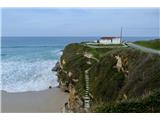
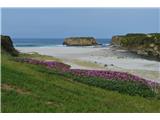
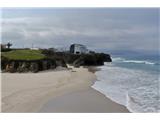
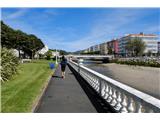
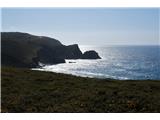
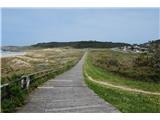
The first day was one of the most beautiful on the entire Camino. Most of the time we walked by the sea along coastal promenades and pleasant paths. We saw a bunch of interesting things, from an attractive lighthouse, flowering coasts, fishing villages to the very visited natural attraction Praia das Catedrais. In plain words … cathedral beach. Here visitors can walk on the sand under giant stone arches carved by the raging Atlantic, explore sea caves and numerous passable tunnels. But here the tide got in our way ... sniff, sniff. We arrived exactly at the highest water level, when viewing this beach is impossible. Even at low tide the visit time is limited to a maximum of 4 hours, before the sea takes over the main word again.

Then came the final part, continuation to our accommodation right on the coast. I had already reserved that in advance, so there were no problems with that. The friendly owner gave us a room with a view of the Atlantic and because of the pleasant roaring the terrace doors stayed open all night. A wonderful day and an even more beautiful night smile.
Late morning in Ribadeo. We look for the tourist office and stamp the first seal1
Then we follow the signs for Camino del Norte, which we walked in full a few years ago2
Soon after this sign the paths diverge. Camino de Mar goes its own way, de Norte in another3
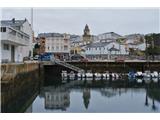
Marina Ribadeo 4
We have no idea how important the signs for Ruta del Cantabrica will be later on5
Former iron ore warehouses, which was transferred to ships with carts6
This is how it went ... the ship was parked below, and from above the ore was poured into its belly7
The location is at a key point, because right next to it is also the fortress San Damián8
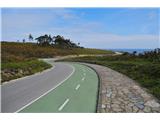
We go on. The route is shared further on by road, cycle path and footpath9
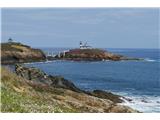
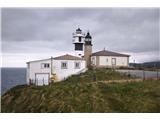
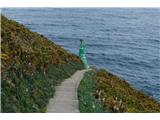
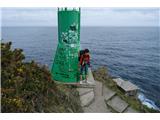
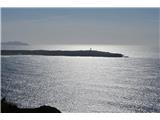
Beautiful lighthouse. There were plenty of these on the Camino dos Faros10
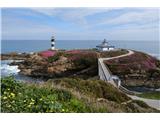
It stands on a small island, where there are both old and new lighthouses. The old one also has accommodation11
Also a personal ID card …12
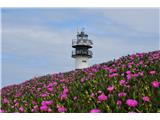
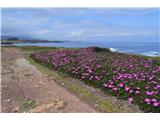
Fully blooming coastal flower Carpobrotus edulis, also called cat's claw13
Old and new. At the old one there is also some kind of tavern, but this time still closed14
We continue on a sunny day …15
Besides the pink claw there is also a yellow one, which we occasionally also track16
We like this, the crashing of waves against the coastal rocks. Soothing, meditative …17
Seen several times already. In the foamy coastal waters they mainly catch sea bass, striped bream and baile18
The heat is pressing, but fortunately a pleasant coastal breeze cools us19
Surprise, my jaw almost drops. There are extremely few yellow markings, although Camino de Mar is an official pilgrimage route20
Rinlo, a coastal village21
Mandatory church, although in the countryside they are of a poorer sort22
Here the sea cuts so deep into the land that they built a bridge over it23
First we visit the village inn, where everything is pleasantly homely24
Translated … two large white coffees, Coca Cola and this large draft beer. All together 8€25
We are already across the bridge. Looking back …26
Here they used to farm mussels, today of course it is completely different27
Interesting, the paved footpath stretches for kilometers and kilometers28
Today we will spend most of the time right by the sea. The coming days will be a little different29
Nicely stacked, wonderful to look at :)30
Along the way …31
Here you can clearly see how the sea is undermining the coastal road32
The weather has gone a bit wrong, which is also forecast for the following days. But there probably won't be rain33
Playa de las Catedrales is one of the most visited attractions both in Galicia and in Spain34
Unfortunately it is only accessible at low tide, and we happen to hit high tide. The water level between the two extremes fluctuates up to 5 meters35
Looking back at the submerged cathedrals36
The nearby guesthouse doesn't have much traffic. Partly because of the early date, partly because of the high tide37
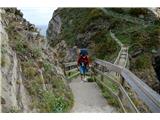
This is a classic, steep stairs to the shore. There will be many more along the entire route38
We too descend almost to the sea. The end of the day is approaching39
Our hotel right by the Atlantic. On top of that we get a room with a sea view and wonderful sound accompaniment all night :)40
This time we started walking only around noon. We covered 24 km and a full 400 meters of elevation :)41
(+14)like
bagi12. 06. 2026 13:49:05
DAY 2 ...

In the morning we got up at the usual time as at home, but it was still pitch dark outside. Spain has a 1 hour delay compared to Slovenia, although it is in the same time zone as us. General Franco is responsible for this discrepancy in geographical zones, who wanted to align with his allies with this. For us, this meant that we set off on the journey significantly later than we otherwise would. No problem, at least we had breakfast in peace nasmeh.

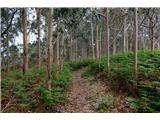
For a good morning we continued along the coastal promenade and much later turned into the forest. In these areas there are extensive eucalyptus plantations, which smell intoxicatingly with their aroma. This is especially pronounced just before rain and we are always happy about these forests. Eucalyptus is also a real stripper velik nasmeh. It constantly undresses and thus creates an extremely flammable base in case of fire. In addition, an abundance of essential oils is available for fuel. That's why the trees are planted in rows in many places, and in between the owners occasionally clear the undergrowth and fallen bark.

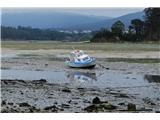
Soon we came back to more populated areas, this time at low tide. This revealed numerous dunes and stranded boats and thus showed how shallow the sea is in some areas. This is especially pronounced in the area of the coastal town of Foz, where we could hardly believe our eyes. Here tourists can only swim at high tide, and fishing boats can only set sail then. Incredible. If we had come at high tide, we would have had a completely different picture.

Then came a rest in one of the many cafes. We usually choose one where we can take off our shoes and air our feet. Almost everywhere they serve you pastry with coffee, and with beer already concrete snacks, the so-called tapas. First time, second time, no problem, all sorts and all free. Many times we ate something of our own from the nearby bakery in addition to what we ordered, and no one ever looked at us badly. Prices are generally lower than at home and we also got full nasmeh.

After a longer break we continued along the stone promenade. For some time we walked by the sea, moved more inland and returned to the coast again. The weather deteriorated according to the forecast, but it remained dry. This suited us quite well, as it was pleasantly breezy by the coast, while inside it was damn humid. The day passed and we finished in the town of Burela. Here too I had previously reserved a wonderful room, which was already ridiculously cheap. This time we walked all day and after dinner we went to bed quite soon. Good night ...
This morning we are earlier, as we do not need to transport ourselves to the starting location1
The sea is calm, the day so far is of a darker sort. This is OK too, we really do not want rain :)2
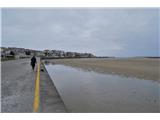
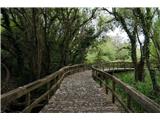
The path is similar to yesterday's, except that the cobblestones have been replaced by more comfortable wooden panels3
No, this is not painted. These are real ceramic tiles, made to order. There is a lot of that in Spain4
Atlantic …5
After a long, long time we are on a forest road6
Ruta Cantabrica. Its markings are everywhere, but there are almost none specific for Camino de Mar7
Eucalyptus. An aromatic tree that constantly changes its clothes :)8
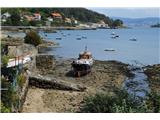
Apparently there is a very strong low tide :)9
This one is a bit better, but still not very usable10
We are arriving in Foz, a larger coastal town11
Its characteristic is an extremely shallow sea, where during low tide numerous dunes appear12
At that time all boats are safely parked in the fishing harbor. There is namely no exit to the sea at low water level13
On the retaining walls the traces of the sea's fluctuation are clearly visible14
We climb through the old part of the town and look for a place to rest15
We quickly park on the outdoor terrace of the local inn. In enclosed spaces it is namely a bit harder to air out shoes and feet :)16
We continue along the coastal promenade17
Hundred-kilometer hikers prefer to go on the grass :)18
Coastal beach near Foz at low tide19
View back …20
For some time we are high above the sea, then we descend back to the coast21
Comparison of the size of a cat's claw22
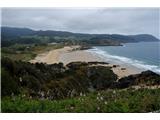
This will become a regular occurrence. Endless sandy beaches, a surfer's paradise23
A thousand and one variants of the paved path24
I compare the signs with the GPS track and the directions overlap in 95 percent25
An unplanned detour that turned out to be a much better choice than the original route26
This one runs above over the bridge right next to the main road27
Now the path is already more inland. We sense the sea more than we see it28
There are very few new houses. Mostly they are old, worn, but almost always inhabited29
Village church with characteristic dampers on the bells. Also the ropes for ringing are usually just outside in the open30
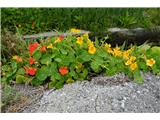
Nasturtiums are a self-seeding plant here, widespread everywhere. The same with calla lilies31
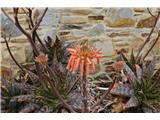
Soapy aloe :)32
Hmm, I don't know how to describe the owner of this fence. The most appropriate word is patient33
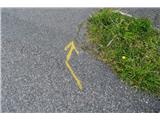
Even if it weren't there. Whoever knows how to get here without the yellow markings doesn't need these either34
Finally some coast again :)35
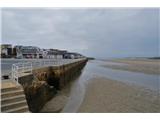
The sea is tireless. Constant waves undermine the coast and the road above it36
We are arriving in the more industrial Burelo37
These two huge halls are a covered shipyard38
This night's accommodation, quite solid and above all clean. Price an incredible 45€39
Today we took our time and weren't in a hurry to get anywhere. We walked 34 km and 500 meters of elevation40
(+8)like
miri12. 06. 2026 15:40:26
Well, it's enough for one day. Path of memory and comradeship.
(+2)like
lino12. 06. 2026 16:01:05

This is an excellent pilgrimage route. Full of experiences, impressions and memories. Good luck further on! nasmeh
(+1)like
bagi12. 06. 2026 18:56:42
Thanks, thanks nasmeh. We adjusted the lengths of the stages to the accommodations, so some days were a bit less, some quite a bit more. There was never any crisis, because we had quite solid weather for the entire Camino.
(+3)like
Janez5213. 06. 2026 11:18:49
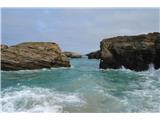
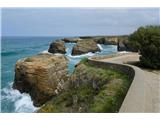
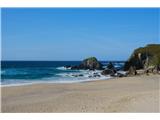
About 14 days ago I was at low tide at Praia das Catedrais. And I'm attaching a few pictures of what this beach looks like at low tide. Mainly it's full of us tourists so it's hard to take a picture without it being full of people.
1
2
3
4
(+2)like
bagi17. 06. 2026 07:35:13
DAY 3 ...

This time we had a longer stage ahead so we got moving quickly in the morning. Only the garbage collectors were faster smile. Generally cleanliness in these parts is quite good as we didn't see much litter anywhere. Maybe in villages it's sometimes more homely but no trash in public spaces. Even in bigger cities they clean the streets early after night parties. Spaniards are night people mainly because of the heat during the day. They really come alive only after eight in the evening when streets and local bars are full of sociable people. During the day most are somewhere in the cool, only the two of us don't give in big.

This day too was marked by asphalt or hard surface of coastal promenades. We already got used to that, just need to air the shoes more often. Besides we saw again what low tide means here. The sea simply drains away and many boats stay on dry land. Usual for locals, unusual for us.

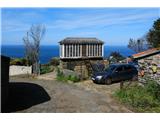
Also hórreos appeared for the first time, locally called granaries. They are mainly at home in humid Galicia and Asturias. Their feature are high bases that isolate the granary from moisture. On top of each base there are overhanging stone slabs acting as a physical barrier to rodents. For the same reason stairs never reach the top but end a step earlier. There are many types of hórreos; the principles are the same for all. Some are still in use, others are more a memory of the past. The longest is a full 37 m.

The day passed, there were plenty of impressions. Due to the length of the path we were glad the sun was more or less hiding behind clouds. We even came across a real sign for Camino de Mar, the first of the four on the whole path. But understand who can rolling. Anyway we successfully reached the goal in the town Celeiro. Dinner followed then straight to bed. Not at all Spanish style smile.
Today's day will be quite longer, so we start early. In Slovenia it would already be quite light :)1
In the shipyard they obviously have a night shift2
Nice paintings on the extensive breakwater3
This is what it looks like from the side. The double wave break and its size testify to the power of the raging ocean4
Another one of the many fishermen. This one is wearing sneakers, but the more serious ones wear boots with spikes for the slippery rocks5
Burela also has a beach. It is a bit set back on the outskirts, but here too there is classic sand6
Again we are on the endless promenade. Usually asphalt is more comfortable than the wavy stones7
Next stop … San Cibrao8
Now we are walking along the main road, which fortunately is not busy9
Railway bridge10
Again we are inland11
The first hórreos appear on our path, colloquially granaries. They are characteristic especially of Galicia and Asturias12
Modern skeletons, never completed. These projects ran aground during the construction crisis around 201013
Suburb of San Cibrao14
The first locals we meet :)15
There are quite a few more of them in the nearby cafe. Spaniards are very sociable people16
But they don't walk too much :). On the entire path we were completely alone17
Above the town there also rises a lighthouse that we are going to visit18
This is Faro Punta A Atalaia19
We have already seen quite a few similar ones, so it doesn't impress us20
This is a different story though. An underwater mine as some kind of monument or reminder21
The tide is out again. The shallow sea retreats quickly and the boats are just for decoration22
You can't even dive properly here :)23
I've never seen anything like it anywhere24
Heh heh, another stranded project :)25
Village scene, cows have priority everywhere :)26
Beautifully marked27
I'm across the stream …28
Eucalyptus forest shedding bark. The aroma is most intense with light rain spray29
We bypassed a wide industrial area and arrived at a very special place30
This is O Portiño de Morás, which at first is just an ordinary fishing village31
But a little later, huge concrete blocks called dolos surprise you32
They are everywhere, but they were made as breakwaters for the nearby aluminum factory33
They were made right on this shore, but many were never used34
Today sea bass is for lunch :)35
Again we are rising high above the sea36
The path is beautiful and truly calming after many kilometers of asphalt37
There is an unusual amount of eucalyptus here. The Galician humidity and warm sun suit it38
A real stripper :)39
Interesting, there's asphalt here too40
We will descend all the way to the small island, then a steep ascent follows41
Another lighthouse, Faro de Punta Roncadoira42
This one even has radar, which I haven't noticed on the others43
It's blowing like crazy, only here is there shelter for the shot44
We continue….45
Interesting travelers from the Netherlands, who move from location to location. They are quite advanced in years, just like their T346
Overall, this coast is very friendly to motorhome users. The parking areas are well maintained and mostly free47
Another specialty of Galicia. The roofs are made of natural slate, entirely local material48
Almost everywhere it is hand-worked, machine-made ones are only for show49
Now that's a surprise. The first of four such signs that we saw from the beginning to the end of Camino del Mar50
There is significantly more of this :)51
Well it's nice, but everything is sand and sand again52
We are slowly finishing the day. The weather held up, and so did we :)53
This time we are overnighting near Celeira. It was a long day and the bed is calling for a visit54
GPS track of the walked route. We accumulated 41 km and 1000 meters of elevation55
(+9)like
bagi18. 06. 2026 06:35:57
DAY 4 ...

A later start to the day still tormented us, but we no longer waited for the morning light. We go when we go, the day will come nasmeh. This time we headed to Porto do Barqueiro, a fishing village that is increasingly turning to tourism. There they just opened a hotel for this season, which came in very handy for us given the length of the stages.

Nothing new regarding the path. Again there was a lot of asphalt, but also some wonderful places. We traveled both by the sea and more inland and saw a lot. One of the characteristics are old houses, which despite the weight of many decades and neglected exterior are still inhabited. Unfortunately we never had the opportunity to see what the interior of these buildings looks like. But such houses are necessarily covered with hand-chiseled slate, which is a completely local material. Newer houses also use it, except some are covered with machine-made. I vote for the hand-made version nasmeh.

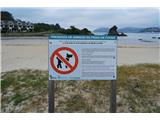
Another surprising feature are the strict bans on leading dogs on beaches. There are warning signs everywhere, regardless of the size of the beaches. Even on the very small ones they are present, completely local, where there are definitely not many tourists. In many places besides the main signs there are also handwritten bans on the coastal rocks. I don't know exactly where the reason is, but the penalties are drastic … from 100 to 3000€.

What also surprised me are the decorative lemons and oranges that no one picks. We encountered this almost the entire way. Oranges are supposedly bitter varieties, lemons are quite real. They differ from our commercial ones mainly in size. In many places they are as big as a man's palm, if not even bigger. We didn't try either oranges or lemons, just in case velik nasmeh. But we tried their food without hesitation and of course seafood. It's finger-licking good and I don't even need to mention the plate next to it. Yummy ...
We leave the hotel and set off on the path. Night says goodbye an hour later in Spain than in Slovenia1
Ooo, what a pleasant surprise :)2
Unexpectedly we come to a morning coffee. They always serve some treat with it3
We descend to the seashore and continue along it4
We cross a long bridge that spans the delta of the Rio Landro river5
There are a lot of tourist accommodations here6
On almost all beaches we notice prohibitions for dogs. Given the fines, there is no joking here7
Coastal monument dedicated to I don't know what8
Looking back …9
We continue …10
We turn inland again. Without the coastal breeze it immediately becomes muggy11
Such houses are all inhabited12
Passage through the courtyard 13
There are a lot of lemons. In some places they are as big as a man's palm14
We also often notice arranged resting areas15
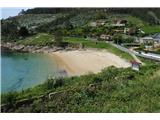
Sand, they don't know any other kind of beaches here. A small stream flows across it that ends its path in the sea16
Walking on such a surface is anything but easy :)17
Over there in the back is the lighthouse, and an attractive path leads to it18
The stairs look quite new19
A descent follows and then another ascent20
View from the path onto the inaccessible coast. We will continue along the hill above it21
And before that we go to the set goal. The stairs descend steeply here22
The lighthouse is simple and in itself nothing special. But the wind is blowing like mad23
The path to it is beautiful and worth a visit24
Final ascent via numerous stairs25
The continuation leads through a beautiful forest26
After a longer crossing of the hill we reach the next coast27
Here too we descend all the way to the sea, but this time we do not need to wade28
We continue along the old path that crosses numerous wetlands29
One of the villages inland that look very similar30
The old houses are all covered with hand-hewn slate31
The path leads us to the sea again, only this time high above it32
The nearby island Coelleira with lighthouse33
For some time we turn inland34
After a longer walk inland we find ourselves on the coast again35
Quietly we hoped and it came true :) The inn is open, the atmosphere very pleasant36
Directly from the sea into the pot. Finger-licking good :)37
With full stomachs and rested legs it is easier to walk :)38
We cross another river that is just before flowing into the sea39
This will be the conclusion of today's stage40
Porto do Barqueiro, the harbor part. Higher up on the hill there is another settlement with the same name41
This is a fishing village that is increasingly turning to tourism42
Quite large boulders :)43
Just find a hotel and it will be a nice day for us44
GPS track. We walked 30 km and 800 meters of elevation45
(+8)like
bagi19. 06. 2026 08:57:58
DAY 5 ...

Another long stage was ahead of us, so we didn't wait for morning coffee. We set off at first light or even a bit earlier and hit the road. The first half of Camino de Mar was already behind us, but many more adventures awaited us nasmeh. The weather forecast this time wasn't exactly encouraging, but we still started in a dry morning. Luckily it stayed that way all morning, only mists were hanging everywhere. Later the sun even came out.

This time something about Spaniards and their kindness. We experienced it once again exactly that day, when the local baker in the coastal town of Espasante baked two chocolate rolls just for us. An elderly lady had just taken them before us. He immediately offered to bake two more, we just had to wait half an hour. Just right for coffee. And indeed they were waiting for us, still warm and crispy. Interestingly, he didn't bake even one extra for possible other customers.

Spaniards are generally very helpful and warm people. In 12 years of my wandering around Spain I have no bad experience. They immediately help with directions, sometimes they even unexpectedly tug you by the sleeve. Also in bars no one comments if besides the ordered you eat something of your own, moreover they usually additionally supply you with free snacks. Besides that no one honks at you if you commit some traffic violation on the road. After a long walk you are namely as if in a trance and something like that happens quickly.

Another peculiarity catches the eye after thousands of kilometers of walking. Spaniards are top experts in stone processing, without a doubt. Everything made of this material is excellently made and sometimes you can only wonder at what was done. On the other hand I would never take them for builders. I have already been in many places and slept in many, so I know what I'm talking about. Objects of this and that kind, even new ones, still somehow look okay from the outside, but for details they usually lack the will. My experience is that in many places the windows seal just enough so that sparrows don't fly around the rooms velik nasmeh.

Anyway, we always like to return to Spain precisely because of the people, new paths and different environment.
Porto do Barqueiro is still sleeping. It will be a long stage, so we set off early.1
This morning is unusually cold, which suits us just fine.2
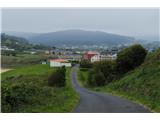
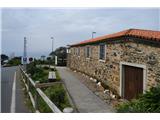
Settlement below the road. The whole thing looks rather poor.3
Seen many times. The most important thing is the entrance to the plot, everything else is mostly open.4
Again we cross wetlands and numerous dunes.5
At high tide everything is covered with water.6
View back from the path over the hill. The weather is so-so, but at least it's not raining.7
We still have 10 km to Porto de Espasante. We will stop there.8
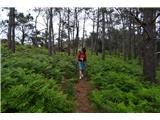
Soft forest path.9
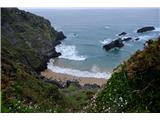
Nedostupna plaža ispod nas.10
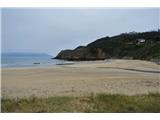
Pristupačnija plaža malo dalje.11
Ponovo skrećemo u eukaliptusovu šumu.12
Obližnja farma.13
Praktični Španjolci. Pojilo je napravljeno od traktorskih guma.14
Nema puno sunca, ali smo posve zadovoljni.15
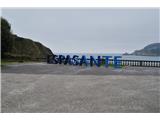
Espasante, malo veće mjesto. Ovdje ćemo stati.16
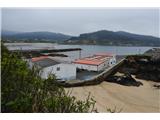
Ribarski gat s hladnjačom.17
Nastavljamo u grad.18
Osobna iskaznica.19
He, he što je sad ovo?20
Antón de Espasante, his living version. The one and only according to tradition from the 18th century.21
The Spaniards are really friendly. Just for us the local baker bakes chocolate rolls :)22
We are still looking a bit at the harbor area.23
Fisherman in Himerju is just cleaning an octopus. He has all the equipment in the motorhome and moves from place to place.24
We continue …25
Again we cross the inland part. The path leads over the hill through numerous hamlets.26
Old and new.27
Meanders of the stream making its way through the dunes.28
Such a small pier is almost at every house by the sea.29
We are arriving in Ortigueira, a larger coastal town.30
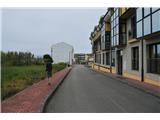
Central part. Here numerous cafes, shops and pharmacies are available.31
We just didn't find accommodation, so we continue a few more kilometers.32
Final destination. The room is small, but everything is clean, and the bed is comfortable. We don't need more :)33
We have walked 39 km and 1100 meters of elevation.34
(+6)like
georgia19. 06. 2026 12:28:54
Really interesting to read about your wanderings. Maybe one day I'll also step on some longer path, waiting for one to call me ...

I would comment on dogs on the mentioned beaches. That sign above clearly says that the ban is only between 15. 6. and 15. 9., so in the main swimming season and even then only between 9 and 21h. So even in summer in the morning or late evening you can bring your furry friend with you to the beach to enjoy. There are many such restrictions on Croatian beaches. That's why we stick to specifically determined wild beaches, where there are no restrictions, no crowds and no one bothers because of dogs and we hope it stays that way.

Have a good journey ahead! nasmeh
(+3)like
miri19. 06. 2026 12:53:11
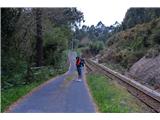
Beautiful reports. Is there a narrow-gauge railway on pic.2?
(+2)like
bagi19. 06. 2026 16:52:07
Thanks to both nasmeh. The railway is of normal width and connects a large part of the coast. Probably the camera angle made the tracks appear narrower.
(+2)like
bagi30. 06. 2026 08:29:45
DAY 6 ...

We woke up to a muggy morning, which is usually due to the nearby sea and salty mists from the crashing waves. Not so this day. The mugginess was everywhere, even further inland, and the hills were strangely foggy. The weather forecast was unfortunately not very promising either. Rain was forecast for the afternoon hours. Nothing to do, we said to ourselves and set off into the new day. We had rain gear, tested on thousands of kilometers in Spain ...

So something about it for new pilgrims smile. Rain can be just drizzle, or it can be heavier downpours that thoroughly soak you. All this can last for days and days and there's nothing left but to walk. I've experienced all this before, many times. And how to protect against wetness?

Some put on light plastic rain capes for single use, I've even seen garbage bags big smile. Others go without anything and get wet like mice. They wait for mercy from above, which may only come after several days. This is of course a recipe for ending the journey, as few carry enough dry clothes. Blisters also appear quickly in such conditions, which is the most unpleasant of all. Such long journeys simply do not forgive poor equipment. In many years of walking in Spain I have learned above all one thing … be as well prepared for rain as possible.

As the first line of defense we use rain capes. Ponchos are not suitable and I do not recommend them after testing. A rain cape allows opening along its length and air circulates quickly. When rain stops you can also partially take it off, lean it on the backpack and ventilate. When rain starts again you just pull it on. Action takes seconds, not minutes. A poncho does not allow any of this, and in wind it flaps like a flag rolling eyes.

The second line of defense is an umbrella, which can be attached to the backpack. In this case both hands are free for using hiking poles. The umbrella is very effective against drizzle, when there is usually no special wind. This is a very common occurrence in Galicia. We of course have the rain cape on, but we do not use its hood in this case. The umbrella takes care of protecting the head. Since the head is free, the feeling of freshness is also much better.

The third thing is rain pants. Without them water starts running into the shoes along the legs and the footwear is soon soaked from the inside out. Various protective membranes are completely without function in this case. We use rain pants that can be opened along the entire length on the side, allowing air circulation. We adjust the opening according to the intensity of precipitation.

As the last and very important thing are of course the shoes. In case of wetness they must above all dry quickly. Leather variants are completely unsuitable because they do not dry. I have already seen pilgrims cutting leather front and back so that toes and heels could at least breathe a little eek. Leather shoes are also a recipe for enormous blisters that form due to constant moisture inside them even in dry periods, let alone in wet ones. We wear tested shoes made of modern materials that are light, breathable, with a membrane against wetness, and above all with plenty of space for toes and heel. In hundreds of kilometers the foot swells and there is quickly not enough space for comfortable walking.

And one more thing is very important … ventilation, ventilation and once again ventilation of the shoes. This dries the inside of the footwear, socks and especially the feet. I warmly recommend it, the more often the better smile.
The hotel price also includes breakfast, so this time we start a bit later1
Today's stage will be more inland2
We walk along a country road …3
Hand-operated washing machine. It is still in use in many places4
We rarely meet any locals, especially so early5
Electricity Spanish style :). The pipes for water supply and drains are similarly messed up6
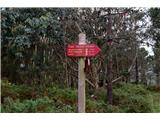
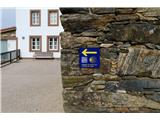
Apparently we are going in the right direction, except that these yellow confirmations are tens of kilometers apart7
Due to the renovation of the train station, we have to take a detour8
What is he thinking when he sees two huge backpacks on four legs :)9
Meljeva kilometer after kilometer ... 10
Village roads are fortunately not busy, only asphalt accumulates11
Sometimes they are so narrow that two cars can hardly pass each other12
Hard to believe, but the postman is transported with this car13
This too is quite Spanish-style …14
We often walk right in the middle of the road because the roadway is significantly more rounded than at home15
Nice :)16
Cariño ahead of us17
That is a larger town where everything is available for our kind of hikers18
Typical coastal streets. House after house, with a channel for rainwater in between19
Last plots with a wonderful view :)20
We also notice this often. Storage of gas cylinders is mandatory in the open21
Hmm, this is not a good sign22
The clouds are slowly leaking, so we protect the backpacks preventively23
It is getting darker and darker, but we hope for the best24
We also visit Faro de Cabo Ortegal, which is only slightly off the route25
As usual, it blows like mad in exposed places and it is better only in shelter26
We have to go back a bit, then we will go over this hill27
A small shower quickly arrives, so we also have to protect ourselves28
Fortunately it is a false alarm, but we keep the ponchos on anyway29
Ahead of us is a steep ascent, which we sincerely look forward to after mostly flat walking :)30
At the top, however, a slight disappointment, as we join the asphalt road again31
No help, the weather is changing. Rain is forecast only in a few hours, but it is already drizzling a bit32
At the highest point there is a field of wind turbines. The birds were probably chopped up long ago, because there is not a single one on the ground :)33
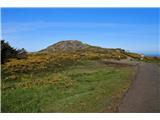
Highest point on Camino de Mar34
This is the Herbeira pass. From here the road only descends35
Here is also grazing land for numerous horses. The wind turbines do not bother them either36
The descent proceeds on asphalt for some time, then follows the worst path of the entire Camino37
Even lower it is not significantly better. With some gymnastics we reach the other side of the wetland dry38
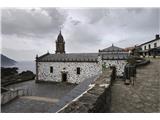
We spend quite some time on the bad path before reaching the final location … Santo André de Teixido39
Incredible … the second one so far on the entire route40
This is one of the more famous churches. Apparently it is the second most important after the cathedral in Santiago de Compostela41
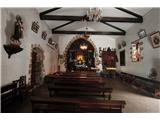
Its interior …42
We will sleep nearby in Casa Rural San Andrés de Teixido43
We are completely surprised by the aesthetics of both the room and the common areas, but especially by the comfort. A full refrigerator is also waiting for us in the kitchen44
It was a long day, but fortunately relatively dry. At night it rained as if it were a bet. We covered 39 km and 1200 meters of elevation45
(+6)like
bagi1. 07. 2026 10:46:42
DAY 7 ...

After a stormy night we were greeted by a sunny day smile. After a really hearty breakfast and saying goodbye to the hostess we set off towards new adventures. To start we took another look at the charming village of Santo André de Teixido, then tackled the steep slope. The continuation was also up and down, this time on forest paths, and the night's storms were very noticeable. The vegetation was soaked and we had to put gaiters on our shoes. This kind of wetness soaks footwear faster than ordinary rain. Checked multiple times. Later we ended up on asphalt again, where all such worries disappeared.

This day was marked above all by extensive areas of dried eucalyptus. We encountered abandoned forests for kilometers and kilometers. As far as I managed to find out, the eucalyptus weevil is most responsible for this. Adult beetles and their voracious larvae feed on young leaves, buds and shoots. Because of this the trees lose leaf mass and the ability to photosynthesize, so they quickly perish in the heat. In addition, eucalyptus in this area is a monoculture, mainly due to rapid growth and quality wood. The damage is therefore even greater.

Another specialty are surfers. We saw a whole bunch of them, dressed in neoprene and with boards under their arms. The beaches are ideal for them, pure sand, sea without dangerous reefs, waves just right. There are many camps, board rentals and learning centers for aspiring wave riders. In addition we encountered vans right by the coast, loaded with equipment and a little space for beds. Another world, a world of enthusiasts who enjoy the waves.

We too enjoyed the sunny day and arrived at our accommodation in the hamlet of A Torre. More by luck than anything we came across an open village tienda, a shop in the local sense, just before parking ourselves in bed. In this sort of shops they usually have everything, from forks and rakes to bread, drinks and whatever else might be found. As long as it's there, the rest doesn't matter smile.
In the morning we are greeted by a rich breakfast that Marina prepares for us a full hour earlier than usual. All praise1
Once again we go through the village, as the continuation of Camino de Mar runs here2
Morning view of the beautiful church3
Village that lives from numerous tourists4
Behind the last houses begins a steep ascent5
Here also runs GR55 and these are the only markings around here6
After a while we finally reach the summit plateau. The consequences of the night's rain are still visible7
Soon the path turns onto a narrow trail8
We are high up. Our morning starting point is far behind9
Sure is sure :)10
The wetness is so intense that we prefer to put gaiters on our shoes11
The worst are the grasses. From them drops shake off as if it were raining12
Still going to another hill and that straight up the directissima. The ascent has neither end nor limit13
At the top. We are high again14
View down on the winding coastal road15
Miradoiro de Purrido. Just before it we will turn into the thicket16
One more together before the deep descent17
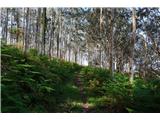
For some time we bite into a gravelly path, then it turns into a beautiful forest18
But it is beautiful only for a while, then follows a more adrenaline-filled part19
After quite a bit of gymnastics we finally arrive at civilization20
This village has a beautiful view of the sea.21
Local craftsman, no doubt about it.22
Village scene.23
Lemons again, and in many places ornamental oranges also grow.24
Another of the many hórreos. All of them have bases against mice.25
A sad sight we have witnessed for dozens of kilometers. The eucalyptus forests are completely destroyed by the eucalyptus weevil.26
Finally we are close to the sea again :)27
Capela de San Antón de Corveiro28
I don't know exactly what it represents, but I think it is the patroness of fishermen.29
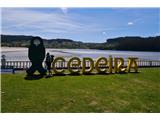
We are arriving in Cedeira and right at the beginning there is a bunch of defensive structures from history.30
Right after that is the fishing settlement. Equipment is drying everywhere, and in the upper part are living quarters.31
View back to the fishing part.32
Personal ID.33
This is the tourist part.34
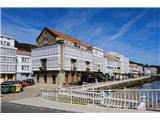
Here and in many other places by the sea there are characteristic large glazed balconies that protect against the influences of the Atlantic.35
These cute little houses are not changing cabins, but toilets :)36
Another granary. Besides the rim against rodents, the stairs are also never led to the top.37
Cedeira from above.38
Bridge over the river Porto do Cabo. Exactly there we will also go across.39
The river from one side of the bridge …40
And from the other side. At high tide everything is flooded.41
Another one of the surfer beaches.42
Hanging laundry right next to the main road.43
The heat is pressing, everything is steaming….44
Next coast, one of many similar ones.45
These are surfers, van camp version. The van is packed to the brim, but for them only the waves matter.46
That's what they're looking for and quite a few of them are in the water.47
For us the day is ending. The sun is already low.48
Another one of the many lighthouses in the distance.49
Again we descend towards the sea.50
We feast our eyes and ears a little and move on.51
A few more kilometers and we will reach the destination.52
Before the accommodation a colorful crowd of kitsch greets us :)53
This stage was also long. We walked 38 km and 1200 meters of elevation.54
(+6)like
miri1. 07. 2026 11:00:02
Beautiful.
like
bagi2. 07. 2026 11:49:10
DAY 8 ...

The last day of Camino de Mar came up, the grand finale nasmeh. But the finish line was still far away, and we also planned to wash our rags for the continuation on Camino Ingles. So we got moving in the morning and started in complete darkness. But we didn't worry about the light. Street lamps kindly lit the streets for us, and as usual the digital map took care of the direction. We had long given up on the official markings. The sun rose quite late in Spanish style and it turned into a nice day.

The first half of the route was some kind of classic from previous days and quite solid as far as the surface goes. There were some pleasant trails, some gravel, and of course I mustn't forget the asphalt. Regarding the ambiance there was all sorts too, from walking in the hinterland to the sea with numerous sandy beaches. But this time right by the sea we came across huge dunes, which are incredibly extensive and high. It's hard to imagine the immense power of the sea that created them. We even walked up a concrete hill on the sand itself.

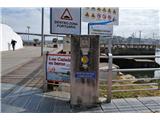
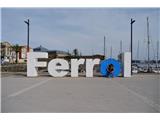
But our final destination was of course Ferrol, a large coastal town with about 60,000 inhabitants. There Camino de Mar also officially ends. We walked to it the second half of the way through a densely populated landscape and I can say that the kilometers inflated as we went eek. The town lies in a deep bay, almost a fjord, and a long coastal road has to be walked to reach it. This of course turns countless times, so we never exactly knew when we would reach the goal. That we were grinding asphalt is self-evident and that it was damn hot too. In between we had to take quite a few breaks, which is not quite usual for us. Anyway, we slowly dragged ourselves into Ferrol and after a few more kilometers into its port area. There a nice sign is placed on the pier and here after eight days we finished Camino de Mar velik nasmeh.

Happy … absolutely, excited … NO. I wrote more about this Camino in the introduction, but this story is already behind us. We still had the path to Santiago ahead, so welcome Camino Ingles (tukaj) nasmeh.
This time we set off very early. The days are hot and it's worth taking advantage of the morning coolness.1
The nearby café is still closed, so no treats this time.2
No, this is not sheet music :)3
First sun…4
The road is straight, as if drawn with a ruler.5
Much later we get rid of the asphalt and rest our legs on the gravel road.6
This one leads high above the coast, but it is scenic and on top of that it is slightly windy7
It is nicely carved into the slope …8
No comment9
We are arriving in Ragon, a sleepy roadside village10
Homely atmosphere :)11
Ragon has an inn and two small shops. One of them is even a Spar :)12
Of course we stop. The inns are usually full because the Spanish like to socialize13
We continue. At the bus station they have a very special seat :)14
Asphalt Camino15
I don't know if it is for luck, or if it is a monument to previous times :)16
We arrive at the area of huge dunes17
These deposits have been forming for centuries or even more, but now they are covered by vegetation18
Part of the path is newly arranged, but even the one uphill is made of pure sand19
Before us there is yet another huge beach20
I can hardly imagine that the stormy sea reaches the considerably higher lying road21
Passage between the dunes22
View back23
For some time we retreat into the forest. The pattern is always the same. On the coast it is windy, inside the humidity presses24
Yet another smaller, more local beach. As always, this one is also forbidden for dogs25
The sun is at its highest position and then the heat presses26
We are walking in the direction of Ferolla. The coast is densely populated27
The connecting road is of a narrower type. What used to be a horse track has received an asphalt surface for modern little horses28
Even with packing, it comes down to millimeters. The vehicle fleet lags significantly behind ours in age29
Uff, it's hot. For a short time we put down our two companions and air our legs30
From the heat the sea has evaporated and quite a few boats have been left high and dry :)31
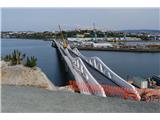
A completely new acquisition that is still under construction. The road from Ferolla continues via this bridge into the tunnel below us32
We are already in the suburbs of the final destination33
Sounds somehow familiar :)34
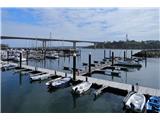
We are approaching the central point by the marina35
At this point we conclude Camino de Mar36
Still the first recording for the continuation along Camino Ingles37
The last day also served up a concrete distance. We accumulated 38 km and 1000 meters of elevation38
(+2)like
You must log in to post a comment:
Username:
Password:
Login
If you do not yet have a username, you must first register.
         
Copyright © 2026 Hike.uno, Terms of use, Privacy and cookies