Lienzer Dolomitenhütte - Große Sandspitze (Ari Schübel)
Starting point: Lienzer Dolomitenhütte (1620 m)
| Latitude/Longitude: | 46,79110°N 12,78420°E |
| |
Route name: Ari Schübel
Walking time: 3 h 45 min
Difficulty: very difficult marked way
Elevation gain: 1152 m
Elevation difference along the route: 1200 m
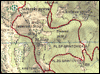
Map:
Recommended equipment (summer): helmet, self belay set
Recommended equipment (winter): helmet, self belay set, ice axe, crampons
Views: 8.866
 | 2 people like this post |
Access to starting point:
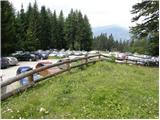
Through the Karawanks Tunnel, we drive to Austria, and then we continue driving towards Spittal and further towards Lienz (a little after Spittal the highway ends). Further, we drive on a relatively nice and wide road through the Drau Valley. A few kilometers before Lienz (near the settlement Unterdorf), we will notice signs for the mountain hut Lienzer Dolomitenhütte, which point us to the left onto a local road. The road then crosses the river Drava/Drau over a bridge and brings us into the village Lavant, where we continue right in the direction of the village Tristach. Between the village Lavant and Tristach we will come to the next crossroad, where we continue left in the direction of "Lienzer Dolomitenhütte". We follow this road, which starts to ascend more steeply, to a large parking lot near the mentioned mountain hut. The road is payable (July 2009 7€).
To Lienz we can also come if instead of through the Drau Valley we drive through the Gail Valley (Korensko sedlo, Hermagor, mountain pass Ziljsko sedlo/Gailbergsattel); in this case, we arrive in the Drau Valley at the settlement Oberdrauburg.
Route description:
From the parking lot, we continue on the road, on which in 2 minutes we arrive at the mountain hut Lienzer Dolomitenhütte.
From the hut, we cross the fence and continue the ascent on a panoramic road (nice view of the serrated ridge - the highest is Spitzkofel 2717 m), which in the initial part is exposed to falling rocks. The road then crosses a short strip of forest and brings us to the indistinct saddle Premstall (1625 m), where there is a smaller junction.
We continue straight past the trough with water (left upwards Weißstein Alm) on the road, which after a few minutes of further walking brings us to the smaller alpine pasture Instein Alm, on which we notice a smaller wooden hut and slightly above it a chapel.
We continue further on the road, which quickly brings us to a marked junction, where we leave it.
We continue the ascent on a wide mountain path, which starts to ascend somewhat more steeply through increasingly sparse forest. The path, from which very nice views open up, crosses the mountain road several times and higher brings us to a smaller wooden shelter. At the shelter, we leave the road again and continue the ascent through a gently sloping high-alpine valley surrounded by high peaks. The gently sloping path, which runs along the torrent stream, higher turns right and ascends more steeply for a short time. We follow this panoramic path all the way to the mountain hut Karlsbader Hütte (next to the hut there is also Laserzsee lake), which we reach after a few minutes of further walking.
We can also reach the hut via the mountain road.
From the hut, we continue east following the signs for Sandspitzen. The path runs on the left side of the valley below the slopes of Sandspitze mountain and is marked with blue dots. After a short ascent, we reach a junction, where the Gebirgsjägersteig path branches off to the left. This path is marked with green dots and is not secured. We continue on the Ari Schübel path marked with blue dots. The path further ascends over scree, turns slightly left, and brings us to the entrance into a somewhat steeper gully. During the ascent through the gully, in early summer we may encounter a snow patch, so the use of an ice axe is necessary, and in the case of hard snow also crampons. The path through the gully is otherwise well secured with a steel cable. The path brings us from the gully to a smaller notch where there is a path junction. We continue left, where a blue inscription on the rock also directs us. The path ascends relatively steeply along the steel cable, and some pegs also assist us. The path then crosses the slope on the south side of the mountain towards the west and soon brings us again to a junction. To the right, steeply upwards, leads the unsecured Gebirgsjägersteig path; we continue straight and in a slight descent continue crossing the south slopes of the mountain. This section of the path is marked with both blue and green dots. On this part of the path in early summer there may also be a snow patch, over which a steel cable is installed, so self-belaying is possible during the crossing. Behind the possible snow patch there is again a path junction. To the left downwards leads the Gebirgsjägersteig path, and we continue on the right path, which starts to ascend quite steeply along the steel cable. The path then turns right and begins ascending the western slope of the mountain. With the help of a few steel cables we soon reach the notch between the summits Kleine Sandspitze and Große Sandspitze. From the notch we continue left to the most demanding part of the entire path. The path here crosses a vertical wall to the west side. There are few footholds here, and only the steel cable assists us. This part of the path is marked with difficulty level B/C. When we reach the west side of the mountain again, the path becomes somewhat less demanding. A little below the summit, the more demanding Panorama weg path joins from the left, after which only a short ascent to the very panoramic summit follows.
Photos:
 1
1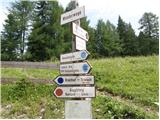 2
2 3
3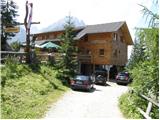 4
4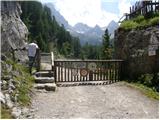 5
5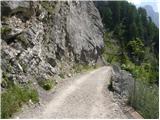 6
6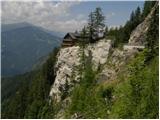 7
7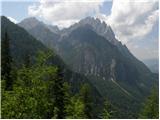 8
8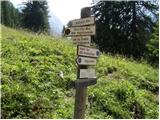 9
9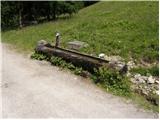 10
10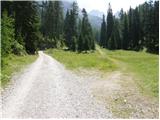 11
11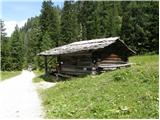 12
12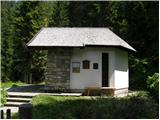 13
13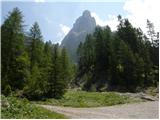 14
14 15
15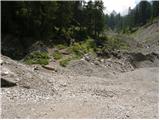 16
16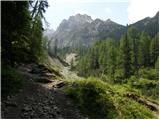 17
17 18
18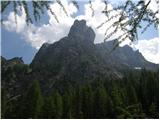 19
19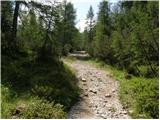 20
20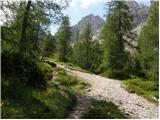 21
21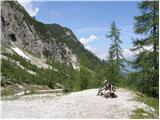 22
22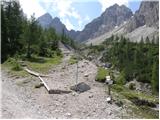 23
23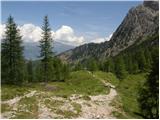 24
24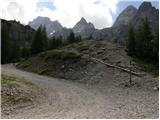 25
25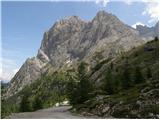 26
26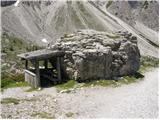 27
27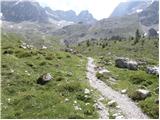 28
28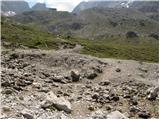 29
29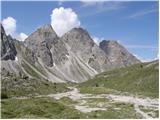 30
30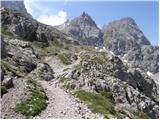 31
31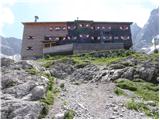 32
32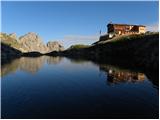 33
33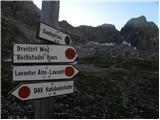 34
34 35
35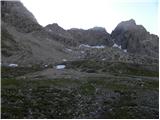 36
36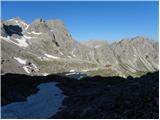 37
37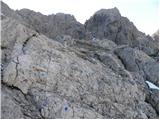 38
38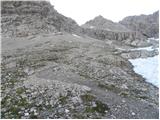 39
39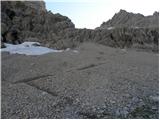 40
40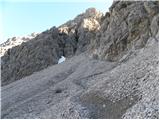 41
41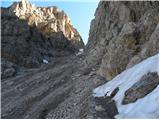 42
42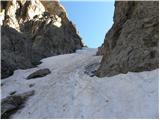 43
43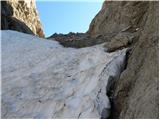 44
44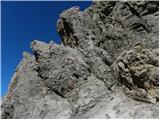 45
45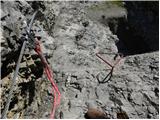 46
46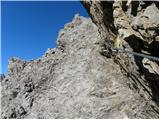 47
47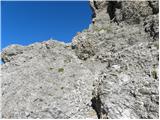 48
48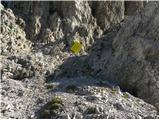 49
49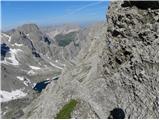 50
50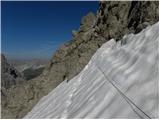 51
51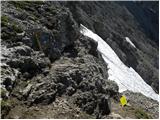 52
52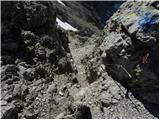 53
53 54
54 55
55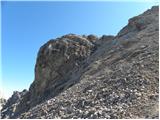 56
56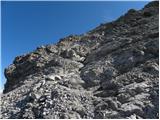 57
57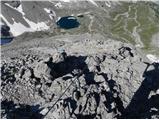 58
58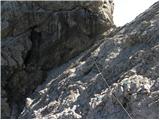 59
59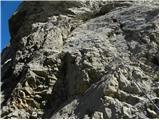 60
60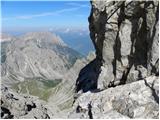 61
61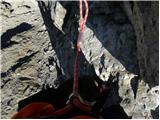 62
62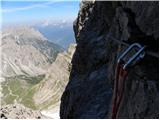 63
63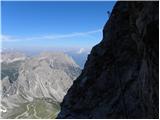 64
64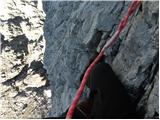 65
65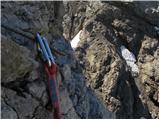 66
66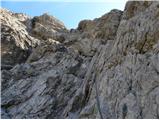 67
67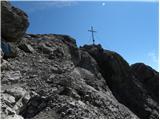 68
68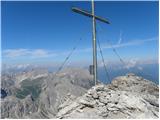 69
69
Discussion about the trip Lienzer Dolomitenhütte - Große Sandspitze (Ari Schübel)
|
| Potohodnik25. 07. 2013 |
Can the path be compared to the path to Montaž via Pipanova lestev in terms of length (effort) and technical difficulty (I don't mean markings and such in what degree the pegs are hammered relative to need)?
|
|
|
|
| felix15. 11. 2021 17:25:09 |
Is this time realistic? (regarding normal walking according to the direction signs). On Bergfex, times to Karslbader hut are 3-4 hours from parking, here to the summit of Sandspitze.
|
|
|
To post a comment you must log in:
If you do not yet have a username, you must first
register.