Passo Falzarego - Lagazuoi Piccolo (via gallery)
Starting point: Passo Falzarego (2105 m)
| Latitude/Longitude: | 46,51950°N 12,00850°E |
| |
Route name: via gallery
Walking time: 2 h 15 min
Difficulty: difficult marked way
Elevation gain: 673 m
Elevation difference along the route: 700 m
Map: Tabacco 03 1:25.000
Recommended equipment (summer): helmet, lamp
Recommended equipment (winter): helmet, ice axe, crampons, lamp
Views: 17.157
 | 2 people like this post |
Access to starting point:
First, we drive to Cortina d'Ampezzo (you can get here via the border crossing at Rateče or Predel to Trbiž / Tarvisio and then on the highway in the direction of Udine to the Tolmezzo exit. From Tolmezzo, we follow the road in the direction of the village Ampezzo and mountain pass Passo della Mauria. The road then descends and brings us to a crossroads, where we continue left (also possible right) in the direction of Cortina d'Ampezzo. At all following crossroads, we follow the signs for Cortina d'Ampezzo.
Or from the Primorska side, where we drive on the highway in the direction of Trst / Trieste. Further, we drive on the Italian highway in the direction of Padova, but only to the highway junction, where we continue in the direction of Veneto and Belluno. Near Belluno, the highway ends, and at the next crossroads we continue in the direction of Cortina d'Ampezzo and then follow the signs for the alpine pass Passo di Falzarego. We then follow this ascending road to the large parking lot on the mentioned pass.
Route description:
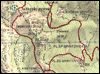
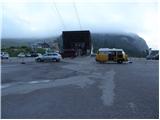
Just a few tens of meters from the parking lot at the lower station of the cable car on Lagazuoi Piccolo, we will notice signs for the Lagazuoi gallery. The path first leads along a poor, closed-to-traffic macadam road (road for ski slope needs), which after a short ascent brings us to the place where the signs for the gallery direct us slightly left. We continue the ascent on a wide mountain path that ascends parallel to the road we just left. The moderately steep path then brings us from the dwarf pine belt to the scree slopes, from which beautiful views open up mainly towards the south. The well-maintained path brings us after less than an hour of walking to a junction, where we continue left towards the Lagazuoi gallery (right is the normal mountain path).
The path ahead immediately ascends steeply along a well-secured ledge, behind which we reach the first tunnel. Here we also notice a warning sign that for further walking we will need good footwear, a lamp, and a helmet (while walking through the tunnels, watch out for the occasionally low ceiling). After passing the first relatively short tunnel, the path descends with the aid of fixed protections, crosses the gully, and then along a slightly exposed and panoramic ledge brings us to the entrance to a more extensive gallery of underground tunnels. Here the entrance sign directs us right into the tunnel, which ascends along the edge of the south wall with the help of steps and steel cable. During the ascent through the tunnel, we notice a few windows through which wonderful views open up. The quite damp path then brings us to a junction at 2551 m (further I will describe the left path).
At the junction of two tunnels, we head into the left one, where we continue the ascent in complete darkness (there are no windows that would at least occasionally provide some light). The quite long, steep, and damp tunnel brings us higher to the next junction (here on the wall we notice the legend of the tunnels). We continue left again, where with the help of shorter very steep wooden steps we climb to the so-called room 3. Here there is also an emergency call that we use in case of problems (use of mobile phones in tunnels is not possible, as there is no signal). After a further short ascent, a tunnel marked exit branches off to the left, but we continue straight to the nicely "preserved" next room (again possibility of emergency call). Just a little further, the path brings us out of the tunnel onto a panoramic ledge from which a wonderful view opens up. The path then steeply ascends along an exposed ledge with the aid of fixed protections, behind which we reach the next room at 2629 m. The path enters the tunnel again and quickly brings us to the next junction. The correct path leads right (left over a steep ladder leads to a viewpoint, dead-end path), which after a few more steps brings us to a greater number of tunnels (nearby is an exhibited wheelbarrow, which is not from wartime). We continue on the left one (not the one that ends after a few meters), which after a further short ascent brings us to the place where the tunnel from the Spirale gallery joins (we ascended via the gallery to Cresta). The path then finally brings us out of the tunnels onto a panoramic, slightly exposed but well-secured ridge (here, during the mining on June 20, 1917, a large part of the mountain collapsed, 40 people died). The path ahead leads between the defensive embankment and behind it brings us to a wide ledge below the summit part of the mountain. Behind the ledge, the path ascends steeply and brings us to the upper cable car station. We continue left and after another few tens of steps reach the mountain hut rifugio Lagazuoi.
From the hut, we continue on a well-trodden path that along the summit ridge soon brings us to the spacious and panoramic summit.
Photos:
 1
1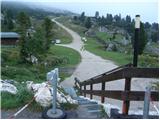 2
2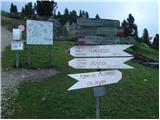 3
3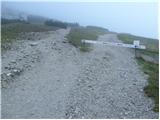 4
4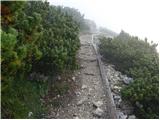 5
5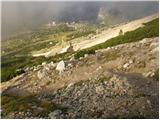 6
6 7
7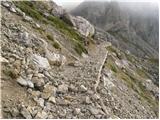 8
8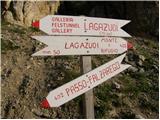 9
9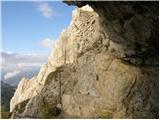 10
10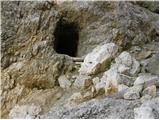 11
11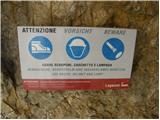 12
12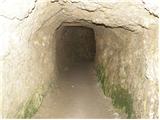 13
13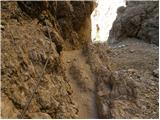 14
14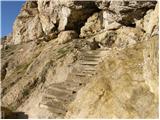 15
15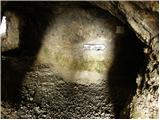 16
16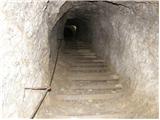 17
17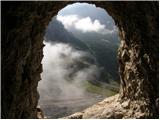 18
18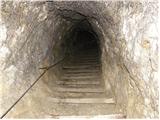 19
19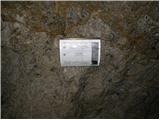 20
20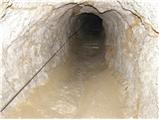 21
21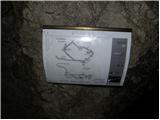 22
22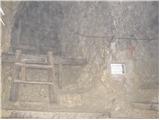 23
23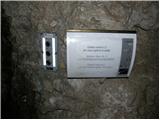 24
24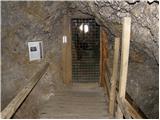 25
25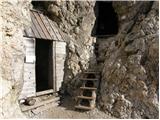 26
26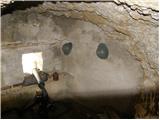 27
27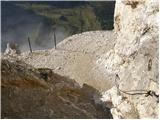 28
28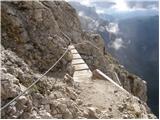 29
29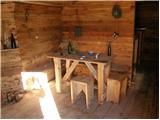 30
30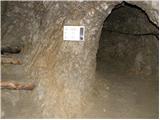 31
31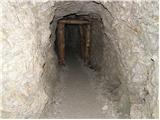 32
32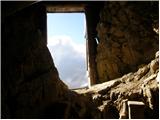 33
33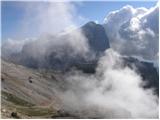 34
34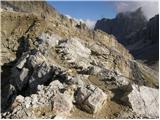 35
35 36
36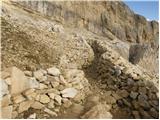 37
37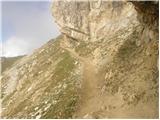 38
38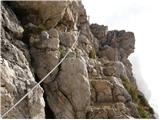 39
39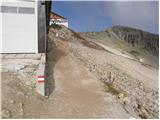 40
40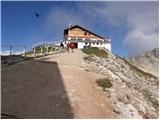 41
41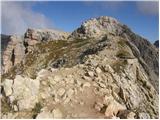 42
42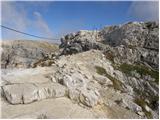 43
43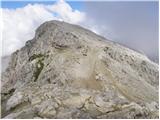 44
44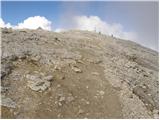 45
45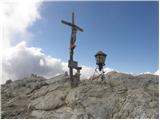 46
46
Discussion about the trip Passo Falzarego - Lagazuoi Piccolo (via gallery)
|
| Borut110. 07. 2023 23:11:22 |
Extremely interesting tour with a historical touch of World War I. We can return via another path (Kaiserjägersteig), which runs over the summit and descends in steep zigzags towards Passo Falzarego. This makes a loop tour, providing insight into former Italian and Austrian military positions (World War I). However, this descent path is less secured and more littered with scree.
|
|
|
To post a comment you must log in:
If you do not yet have a username, you must first
register.