|
| pohodnik3815. 02. 2015 19:26:11 |
Regular visitors of our feeder 
 1 1 2 2
|
|
|
|
| ločanka16. 02. 2015 16:34:57 |
On the first picture there's a treecreeper in the feeder, on the second among the sparrows at the dance also a hawfinch.
|
|
|
|
| velkavrh17. 02. 2015 10:46:05 |
Near the house there's forest and great spotted woodpeckers quite often visit the feeder. They like suet cakes too. Unfortunately they're harder to photograph.
 1 1 2 2
| (+1) |  | |
|
|
|
|
| ločanka17. 02. 2015 18:13:13 |
A dunnock came to me today at 17:53, the 4th one. Can't be done, right?
| (+1) | | |
|
|
|
|
| ločanka19. 02. 2015 16:57:36 |
Now every morning blackbird song accompanies me to the parking lot, the dunnock sings its song too. On the larch branches in the afternoon siskins were singing, they surprised me. Spring is coming to the land!
| (+2) | | |
|
|
|
|
| ločanka25. 02. 2015 16:56:44 |
Now apparently in Domžale near the municipality on the spruce there are little owls visiting. Nice opportunity for us who haven't seen them otherwise than in pictures and the zoo, to come take a look. I think such a sight is rare!
|
|
|
|
| Ornitolog25. 02. 2015 19:54:48 |
It's really rare!
Little owls characteristically gather in small to medium-sized groups in winter (usually up to 10, sometimes 50+). This is quite unusual for owls, as they are known as extremely territorial species. Little owls are an exception, but only during wintering. When spring begins, they disperse back to their territories. These communal roosts are typically located in close proximity to humans, often even in the centers of larger towns (e.g. Žalec, Celje, Domžale,...), as there is more prey there in winter - mice. They use the same roosts for years (even more than 30 years), unless there are serious disturbances. These owls most often gather in conifers, also in larger cypresses and trees covered with ivy.
Even if 20 owls are sitting in a tree in our own garden, we'll have a hard time spotting them during the day. The easiest way to find communal roosts is to see lots of grey owl pellets under some spruces.
If anyone knows of such a communal roost of little owls, I'd be very happy if you reported it.
But don't chase the owls away, as they are very useful animals. Various stereotypes about them are completely untrue
Best regards
| (+5) | | |
|
|
|
|
| ločanka28. 02. 2015 18:42:05 |
The opportunity must be seized, so today we drove to Domžale. Had to ask people a bit and we were already standing by two modest spruces in front of the block on S.Jenk street.
The sight of three little owls that found shelter in the not so bushy branches of the spruce was truly magnificent. They weren't disturbed, but faithfully followed the movements below with their gaze. The neighbor nearby said there were about 15 of them before. These little owls are so regal! My joy was immeasurable!
| (+4) | | |
|
|
|
|
| Sorok17. 04. 2015 13:58:59 |
THX
| (+1) | | |
|
|
|
|
| velkavrh24. 04. 2015 02:32:42 |
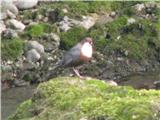
We've already stepped firmly into spring. Migrants returned long ago. Yesterday I saw a dipper by the Kokra river, which isn't the most common.
 1 1 2 2
| (+1) | | |
|
|
|
|
| Ornitolog24. 04. 2015 10:29:34 |
Hello,
very interesting bird encounters! These are also important data for the ornithological atlas of Slovenia. It would be great to have as many such posts on bird observations (especially rarer ones like raptors, gallinaceous birds, owls and other mountain birds) as possible. Just state date and place of observation and number of individuals. If you add a photo to the post, even better!
Regards
| (+1) | | |
|
|
|
|
| Ornitolog28. 04. 2015 18:54:17 |
Greeting,
this weekend I traversed Pohorje (MB - SG). This time I was lucky to spot and photograph some interesting bird species like pygmy owl, rock bunting and corncrake. Anyone else seen or photographed interesting bird species?
| (+2) | | |
|
|
|
|
| zlatica30. 04. 2015 06:41:35 |
Ornitolog, for total non-knowers it would be good if you labeled under the picture which bird is which. Are they in the order you wrote or is first maybe rock bunting, second corncrake and third pygmy owl - if I see right, the last is an owl species. Sorry for ignorance.., but that's our (non)knowledge...
| (+1) | | |
|
|
|
|
| ločanka10. 10. 2015 08:48:26 |
Tits are already regulars on my balcony, come regularly 2x daily, I attract them with crushed walnuts, and it's really pleasant to watch them perch on the willow branch and peck those walnuts, helping with their little feet. I enjoy observing!
| (+1) | | |
|
|
|
|
| Ornitolog3. 03. 2016 13:18:05 |
Greeting,
I'm interested if anyone will soon notice large and loud birds returning north in V formations on a nature walk. These are cranes with characteristic long neck and legs.
Please report observation (date, time, location, approx. number of individuals, flight direction).
Regards
| (+3) | | |
|
|
|
You must log in to post a comment:
If you do not yet have a username, you must first
register.