|
| velkavrh7. 07. 2015 12:35:51 |
On this Dolomite tour I saw for the first time also such flowers as we don't have at home yet - wonderful pink, narrow-leaved silene, alpine clover, Villarsia's trefoil, mountain vetch, pale clover, snow clover, Thal's clover, short-leaved lousewort - it was above 2500m, I checked the leaves, extremely low catchfly - several candidates, thistle catchfly, I didn't notice hairy silene, more homulice, divjakovce, grinte, one-nutted sedge, pearl onions, smokes, škržolice and maybe more.
|
|
|
|
| Apolonija7. 07. 2015 17:03:46 |
You saw a lot. Will have to go again sometime and photograph.
The poppy still bothers me. Do you think Petkovšek's grows there and it's not just possibly Rhaetian?
For consolation, I'm sending you not exactly wonderful photo of wonderful pink (Dianthus superbus)
 1 1
|
|
|
|
| velkavrh7. 07. 2015 21:24:15 |
I found out that photos 59 and 60 are another species of nigritella. Similar to our confirmed moisture-loving nigritella-Nigritella hygrophila. I'll check more precisely in Flora Alpina.
With the vetch it's southern vetch-Astragalus helveticus. (I'll add)
I already borrowed Flora Alpina from the library again.
I found out that besides opposite-leaved pink saxifrage I saw also a subspecies of it -Saxifraga oppositifolia subsp. rudolphiana. It grows from such mossy cushions like white stellaria. But I didn't photograph it, which is a pity. Both grew almost at Triglav height.
Also I saw homulic and Hohenwart saxifrage-neither was photographed.
According to Flora Alpina I found it's not common Turkish clover-that's more red. It's a subspecies-Onobrychis arenaria subsp. taurerika.
Such colored lousewort as I found isn't in Flora Alpina. As I said I saw at least three sites. As if it were a hybrid of Clusius' and Styrian one, which is white. Need to send photo to some real botanist.
|
|
|
|
| Apolonija8. 07. 2015 12:30:49 |
Brane, you nicely studied and described everything. Now please tell me about my dilemma with the poppy. Lp
|
|
|
|
| velkavrh8. 07. 2015 17:35:59 |
I studied these three species of yellow poppy already in winter. In winter I have a lot of time and devote myself to such studies.
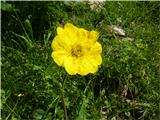
These three yellow mountain poppies unfortunately look very similar only from distance photos. Location reveals something. I know Kerner's poppy doesn't grow that far south or west-as you like to call it. So only Petkovšek's and Rhaetian remain. Macro photo of the flower would tell more. As I remember Petkovšek's is a bit taller and has larger flower head. Both have same leaves, ridged rays on flower head are same. On Rhaetian the sepals are covered with black hairs. Rhaetian grows on dolomite scree as it was, so I'd determine it as Rhaetian-probably correctly. For 100% need macro flower photo, because plant height can mislead as conditions differ.
Haven't got to nigritellas this morning yet.
|
|
|
|
| Apolonija8. 07. 2015 18:48:55 |
Brane, I asked because I don't know if Petkovšek's poppy grows in Dolomites at all. That it's endemic to Bohinj-Krn group probably doesn't mean it grows only there. Or does it? Are we getting too picky? Maybe alpine poppy suffices???
http://www.gore-ljudje.net/novosti/90717/
|
|
|
|
| zlatica8. 07. 2015 19:05:46 |
This time yesterday I retreated higher into the mountains before the terrible heat, after about 20 years I visited Mangart again, which richly rewarded me with flowers, so I'll have a hard time choosing photos for you. Saxifrages of all kinds dominated (as Dr. Nada Praprotnik says, saxifrages are champions of the plant world and I couldn't agree more). I identified 7 species, whether correctly or not, you'll help me. As one of the most interesting flowers I went to see creeping soldanella, which is a beautiful flower (there's also mountain soldanella at the saddle). But when I unexpectedly spotted Triglav neboglasnica in front of me, which I've been looking for for years, I have to admit I squealed with joy. And it wasn't just one specimen, it greeted me all along the climbing path and also on the way back via Italian side, so I was totally excited. I felt sorry for all those who couldn't admire it with me. Branko, this year I overtook you with neboglasnica, but I know you allow it, since I saw it first time, you visit it regularly at Bogatinsko sedlo. Among the flowers there are some unknowns, where your knowledge will be highly appreciated. Now it will take some time to upload all photos.. 
 1 1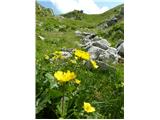 2 2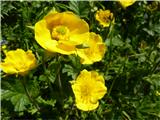 3 3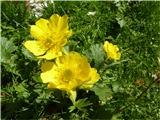 4 4 5 5 6 6 7 7 8 8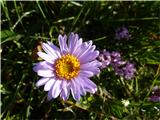 9 9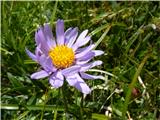 10 10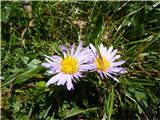 11 11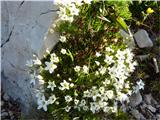 12 12 13 13 14 14 15 15 16 16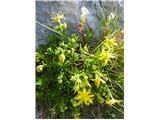 17 17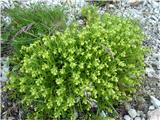 18 18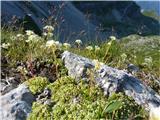 19 19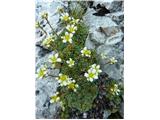 20 20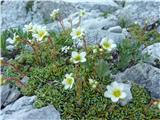 21 21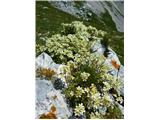 22 22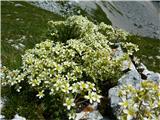 23 23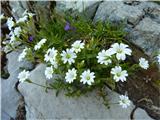 24 24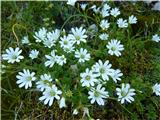 25 25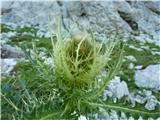 26 26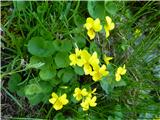 27 27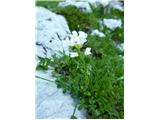 28 28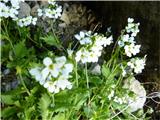 29 29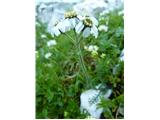 30 30 31 31 32 32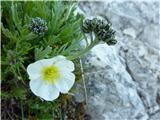 33 33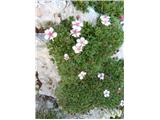 34 34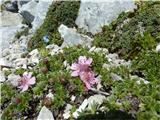 35 35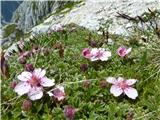 36 36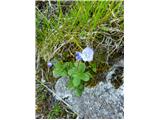 37 37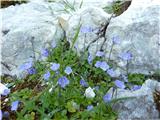 38 38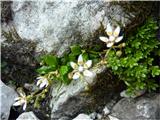 39 39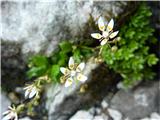 40 40 41 41 42 42 43 43 44 44 45 45 46 46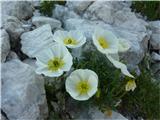 47 47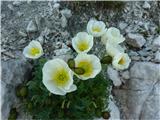 48 48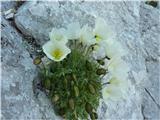 49 49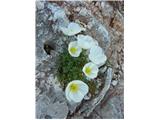 50 50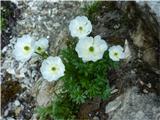 51 51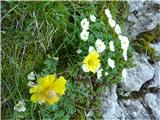 52 52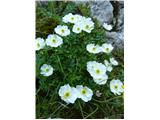 53 53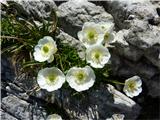 54 54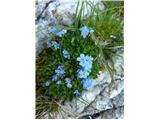 55 55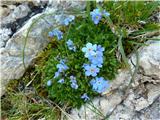 56 56 57 57 58 58 59 59 60 60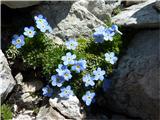 61 61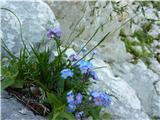 62 62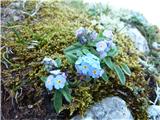 63 63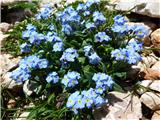 64 64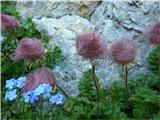 65 65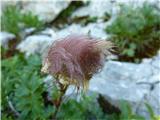 66 66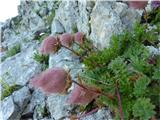 67 67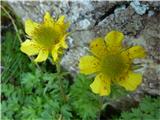 68 68 69 69 70 70 71 71 72 72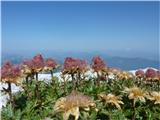 73 73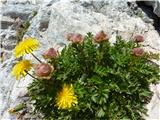 74 74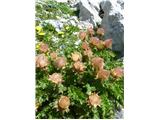 75 75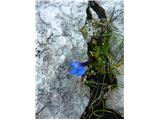 76 76 77 77 78 78 79 79 80 80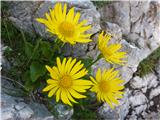 81 81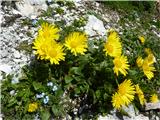 82 82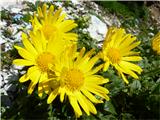 83 83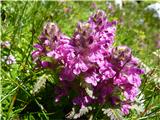 84 84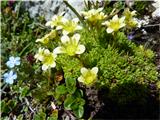 85 85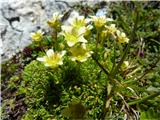 86 86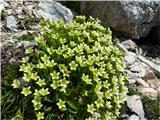 87 87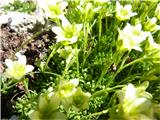 88 88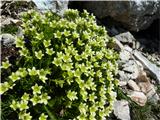 89 89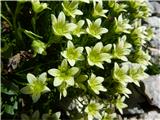 90 90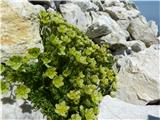 91 91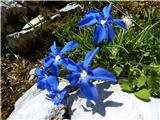 92 92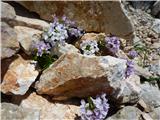 93 93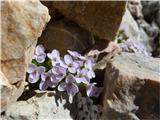 94 94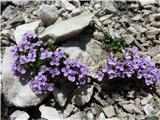 95 95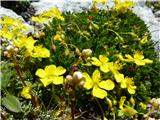 96 96 97 97 98 98 99 99 100 100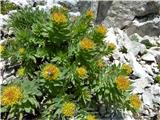 101 101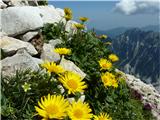 102 102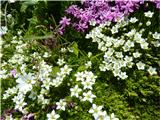 103 103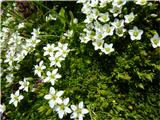 104 104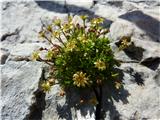 105 105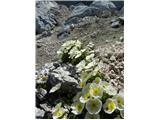 106 106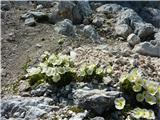 107 107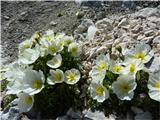 108 108 109 109 110 110 111 111 112 112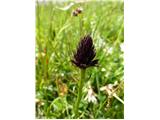 113 113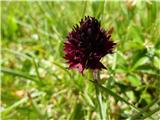 114 114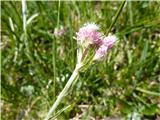 115 115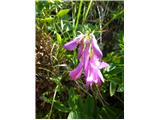 116 116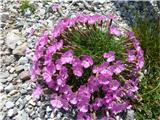 117 117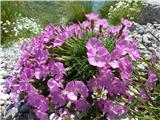 118 118
| (+1) |  | |
|
|
|
|
| velkavrh8. 07. 2015 19:52:32 |
zlatica, Mangart looks like it won't be mine this year, even though so many flowers grow there that aren't elsewhere. Let's look:
no. 12 and onwards - I think it's gerardova črvinka
no. 24 - not skalna smiljka - this looks different - it's koroška smiljka
no. 25 - don't know - several options (soška, toga)
If luck helps I'll go see triglavska neboglasnica on Sunday on Verner, can't before.
|
|
|
|
| zlatica8. 07. 2015 20:58:52 |
Branko, before I uploaded everything you were already in action. Yes, this črvinka could be it, really looks like it now that I've looked what it actually is. Eh, these smiljke are really hard. When you can, please also check what I added later, e.g. kranjski kamnokreč if it is, and 103, 104 where probably one is also črvinka, and other unknowns.
|
|
|
|
| velkavrh8. 07. 2015 21:45:24 |
zlatica, smiljka is toga - checked
no. 80 - correct
no. 81-93 - correct.
no. 92 - for triglavski svišč basal rosettes are needed - I don't see them
no.96-98 - determining popon is always delicate
no. 103-105 - gerardova črvinka
no. 105 - is evergreen
no. 115 - common majnica
no. 99-100 - is pirenejski kamnokras - from crucifers - characteristic mountain flower of screes and rubble.
|
|
|
|
| velkavrh8. 07. 2015 22:43:39 |
I also found the name for the murka that grows in the Dolomites - we don't have it here.
From Flora Alpina I found the name for the last unidentified flower for which I had a reasonably good photo for identification. It's tuberous thistle - Cirsium tuberosum - no confirmed site here or stream thistle - Cirsium rivulare - this grows here. It grew on slightly marshy meadows or pastures among tall grass. Height almost same - 40-120 cm, stem smooth - no thorns or hairs, flowers at stem end can be several, flower same size - 15-30. Difference only in leaves and I would identify it exactly but unfortunately not visible enough on photos. If I see correctly on photo no. 3 the leaf - such has stream thistle, my riddle is solved.
Precisely from Flora Alpina I identified also yellow ušivec, which doesn't grow here.
Still researching footage from Dolomites. Unfortunately group goes too fast to even photograph all I saw or better quality. Moment you make four shots you're 50m behind last in line. On flat I catch up quick, uphill harder.
One more riddle I have. Photographed this small low svišč at 2500m. Can't say exactly if it had multiple flowers on stem or not - then it would be snežni. Leaf rosette not visible - one of main ID features. But had extremely small petals. Not bavarski because bavarski has characteristic belly. Still possible nizki.
|
|
|
|
| zlatica9. 07. 2015 07:37:34 |
Branko, thanks for the identifications. Regarding svišč you're right. Rosette visible on 76.
Your murka is nice and interesting, a bit more round and special color.
Apolonija, you're asking Branko about Petkovšek's poppy. Looked in Flora Alpina and it doesn't seem to grow in Dolomites. There on map sites marked blue which for this poppy defined only for Slovenia. But already found some errors in these maps. Branko, did you look too? Regards
|
|
|
|
| Apolonija9. 07. 2015 09:45:26 |
Zlatica, thanks. I was paying attention when Brane identified his as Petkovšek's and really wondered if it grows in the Dolomites too. You know, the Latin name is Papaver alpinum subsp. victoris. Surely you looked under that name. I'm happy if some plant is endemic to our areas. I used to think that for Blagay's wolfsbane, then found out it grows elsewhere too
Brane, congrats for zeal and persistence! First hike and photographing, then "researching" to find the real name. It makes us happy, right?
|
|
|
|
| zlatica9. 07. 2015 12:24:32 |
Yes, one more flower interests me, forgot to attach it to the Mangart collection. Photos a bit worse because quite dark in that rocky part. Which flower is this? No idea.
|
|
|
|
| velkavrh9. 07. 2015 12:32:01 |
zlatica, that's Lloydia. We don't see it often. We have two - the common Lloydia serotina and the late L. serotina. Flora Alpina mentions only the common one.
|
|
|
|
| zlatica9. 07. 2015 13:16:04 |
Oh, Branko, bravo! Thanks.
|
|
|
|
| Apolonija9. 07. 2015 13:42:41 |
Genus Lloydia is a close relative to genus Gagea, which includes also yellow dog's garlic. Both are delicate plants, aren't they?
Genus Lloydia comprises 12 to 20 species and almost all native to C.Asia. As I've read many times, only 1 species grows in Europe and that's common lojdija (L.serotina). Term serotina means late. I'm sure serotina and serotiana are "one and same". Many plants named that way...
So please Brane, tell me where you got the info you mentioned.
|
|
|
|
| zlatica9. 07. 2015 14:13:22 |
Just now I was still reviewing books and saw in Flora A. that it lists only one species of lojdija, namely the common one (L. Serotina). On the internet the name late l. also appears, mainly on some photographs, with the Latin name serotiana once and serotina once.
And also this: Mala Flora Slovenije lists only L. Serotina!?
|
|
|
|
| otiv10. 07. 2015 20:38:56 |
This is for starters. Tomorrow the continuation follows.
| (+1) | | |
|
|
|
You must log in to post a comment:
If you do not yet have a username, you must first
register.